Devorah and Eli’s unconsummated marriage
Unorthodox: The Scandalous Rejection of My Hasidic RootsDevorah and Eli’s unconsummated marriage is an intimate difficulty that quickly becomes entangled with communal expectations, family scrutiny, and medical uncertainty. What begins on their wedding night as a private problem neither knows how to address becomes the consuming task of their first week together. The attempts do not succeed; instead, the couple faces mounting pressure, an uncertain religious status for Devorah, and explanations that shift between bodily diagnosis and personal blame.
The Wedding Night and a Private Failure
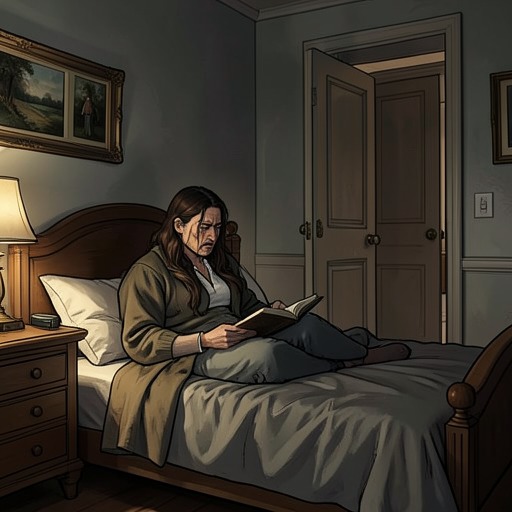
On their wedding night, Eli prepares cheap kosher champagne, chosen because Chaya has told him it is Devorah’s favorite, although she does not like wine. In the bedroom, towels have been laid across the bed and K-Y jelly set out. The careful preparation cannot compensate for how little either newlywed knows about what is expected. Devorah is uncertain how to guide what happens, and Eli appears equally unsure. Their first attempt ends without consummation. Eli turns away, says he is tired, and leaves Devorah to lie awake with the failure unresolved.
The episode is not presented as a simple refusal by either spouse. Devorah does not know what to do, while Eli is anxious and inexperienced. The mismatch between the expectation that marriage should proceed smoothly and the couple’s actual uncertainty establishes the pattern that follows: each failed attempt makes the next one more emotionally loaded, while neither has a private, confident understanding of how to resolve the problem.
Family Knowledge and the Week of Attempts
The next morning, Devorah’s mother-in-law asks how the night went. Devorah answers vaguely, regarding the matter as something she and Eli should manage between themselves. The mother-in-law then reveals that her husband has told her the marriage was not consummated. Devorah is mortified, and the arrival of Eli and his father ends the conversation before she can respond. The untouched chocolate bonbons on the table remain beside the scene of her embarrassment.
Devorah confronts Eli about telling his father and fears that the information will spread through both families and become neighborhood gossip. Her distress is specifically tied to the prospect of being identified publicly as the girl who could not consummate her marriage. Eli says he was taken by surprise and relays his father’s advice: they should try again that night and leave as soon as the Sheva Berachos ends, so they will be less tired. The proposed solution treats the problem as something to finish quickly, but it also heightens Devorah’s sense that their private life is no longer theirs alone.
The week of post-wedding celebrations supplies a striking contrast. Devorah wears carefully chosen outfits, altered to fit her, and freshly styled wigs; customarily, the bride is the best-dressed person at the festivities. Yet her attention remains fixed on the attempts that have not succeeded. Her new sister-in-law Shprintza, married two months earlier rather than waiting for Devorah’s wedding, glowers from the corner, though Devorah cannot understand her bitterness. The celebrations continue around Devorah while the unresolved problem dominates her experience of them.
With each failure Eli grows more anxious, and his family presses the couple to complete the marriage. By the third attempt, he can no longer summon the response needed to proceed. He explains that, in yeshiva, boys had sexual experiences with other boys; after years in an all-male environment, he says, the transition to intimacy with a woman feels strange. He had not known what a girl looked like before seeing Devorah. His account makes the difficulty more complicated than a question of technique: he is trying to adjust to an unfamiliar form of intimacy under pressure, while Devorah begins to see her own body through his uncertainty and to feel self-conscious about it.
Religious Status and Medical Explanations
The couple stays awake until five in the morning trying to calm Eli’s nerves, but desperation replaces eagerness as the week wears on. At its end, rabbis tell them to stop because Devorah is bleeding from irritation. They cannot determine whether the blood comes from the breaking of the hymen, so they rule that she is Niddah. She must count seven clean days, or use fourteen cloths, before immersing in the mikvah. The ruling adds a ritual and temporal barrier: the couple cannot simply make another attempt the next night, and Devorah’s body becomes the subject of a religious determination that remains medically uncertain.
While waiting to immerse, Devorah develops a severe rash on her arm and shoulder and seeks an appointment at a clinic on Heyward Street. She normally avoids the crowded, dirty ODA medical center, but cannot get an immediate appointment elsewhere. Dr. Katz is unsure of the diagnosis and says he is eighty percent certain it is some form of chicken pox; he prescribes antiviral medication in case that is correct. This episode further interrupts the timetable for trying again, without resolving the original difficulty.
After Chaya speaks to the rabbis, they refer the couple to a specially approved sex therapist, a married pair who speak separately with Devorah and Eli before bringing them together. The doctors use plastic anatomical models that fasten together and explain Devorah’s reproductive system. She finds the instruction clinical rather than reassuring, though the shared session eases the feeling that she alone is being blamed. When the male doctor proposes an examination, Devorah panics and initially refuses. He applies lidocaine before examining her and then says she has two hymens and will need surgery. The diagnosis offers a physical explanation, but it is not the last one.
Second Opinions and Growing Distance
Eli tells his mother about the proposed surgery. She doubts that one doctor’s opinion is sufficient and gives him the number of her Manhattan gynecologist, Dr. Patrick, a high-risk specialist who delivered her children. At Dr. Patrick’s office on Fifth Avenue, overlooking Central Park, Devorah feels conspicuous and ashamed of being seventeen and married to a man whose black velvet hat, long silk coat, and swinging payos mark him as Hasidic. The setting sharpens the contrast between her familiar life in Williamsburg and the discomfort she feels in this medical office.
Dr. Patrick examines Devorah and raises the possibility of a vaginal septum, describing a possible internal wall and suggesting that scarring may be involved. She orders an MRI to confirm the suspicion. During the scan, Devorah discovers that she is claustrophobic; she cries and shakes in the tube, and the image is not clear. Dr. Patrick says the MRI is inconclusive because a longitudinal septum may not show up on the scan, and refers the couple to another therapist. The successive consultations produce possible explanations, but no confirmed diagnosis or straightforward remedy.
As the couple moves from doctor to doctor, Eli stops approaching Devorah as he did at the beginning of the marriage. He sees little point in trying until they know what is wrong, while Devorah suspects he hopes a serious diagnosis will move blame away from them. She says she never fully believed the claim that the problem was her fault, but thinks Eli takes his family’s judgments seriously. The original uncertainty thus acquires an additional strain: the search for a bodily cause becomes bound up with each spouse’s fear of being blamed.
Eli increasingly comes home late from work and leaves for evening prayers soon after arriving. Earlier, he had sometimes skipped prayers to be with Devorah. She allows him to go, then reproaches him for leaving her; she wants solitude but also fears feeling unloved. That contradiction captures the marriage’s condition at this point. The failure to consummate it has not only brought outside pressure and medical scrutiny into the couple’s private life; it has begun to shape how they approach one another, even as the evidence leaves its cause unresolved.